
Ultrasonic Bird Scarers
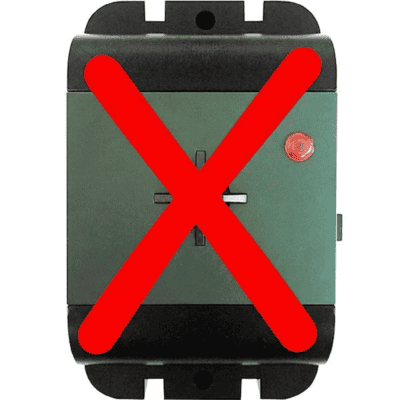
Ultrasonic Bird Scarer are cheap and sold by many companies. Unfortunately, birds (like us) can’t hear these high frequencies and they have effect on birds at all. The evidence is clear and scientific and the research papers below prove they are a waste of time.
Do Ultrasonic Bird Repellents Work? – A Review of Research Articles
There are numerous manufacturers of ultrasonic devices that claim to be an effective method for repelling birds. Revealingly, these are sold almost exclusively on the domestic market rather than to the professional market. The apparent advantage of these devices is that they are inaudible to humans.
Birds can't hear ultrasound
All scientific articles say that ultrasound doesn't work
However, in case there were any other non-auditory effects, a review of all research papers addressing the effectiveness of ultrasonic bird detectors was undertaken. A total of 23 research papers were found. Of these, 21 papers found no evidence that birds were deterred or repelled in any way by ultrasonic transducers. For example, the U.S. Federal Aviation Administration, in its Wildlife Hazard Management at Airports manual, states, “Do not install these devices in hangars or other airport environments.”
One flawed article and one fallacious one say so.
There is an article (Ogochukwu E. S., Okechukwu A. D., and Nnaegbo O. G. 2012) that supposedly shows some ultrasound effects on birds in Nigeria. However, the article lacks any quantitative results and data which raises questions about it’s findings. The only reference to a positive ultrasound result is the elusive statement, “Birds usually move away from their perches.” There is another article (V. Arun Pandiyan, J. Murugan@Senthamilan, D. Udayakumar, V. Vinithkumar 2019) that purports to show ultrasonic devices working on birds, which is a sad copy and paste of the 2012 Nigerian article. The article is so poorly written in the testing section that they neglected to note that they had also plagiarized a bioacoustic article and started discussing bird distress calls.
Conclusion - Science says ultrasound does not scare birds
In conclusion, despite years of academic research by some of the world’s most prestigious scientific institutions, there is no credible evidence that ultrasonic bird deterrents actually work. By comparison, there are over 50 research studies detailing the effectiveness of bioacoustic bird deterrents.
List of Scientific Papers
What can Birds Hear (2004) Robert Beason. USDA Wildlife Services
Wildlife Hazard Management at Airports (2005) Cleary and Dolbeer.U.S. Federal Aviation Administration
Behavioural responses of the feral pigeon to deterring systems (2000) Daniel Haag-Wackernagel. University of Basel
Electro-Acoustic Influence on Birds (2007) Dimiter Nankinov1,Nikolay Ivanov2, Boris Nikolov1. Institute of Zoology, Sofia
Evaluation of the Efficacy of Products and Techniques for Airport Bird Control (1998) Ross E. Harris and Rolph A. Davis. Aerodrome Safety Branch Transport Canada
Review of international research literature regarding the effectiveness of auditory bird scaring techniques and potential alternatives (2003) J. Bishop, H. McKay, D. Parrott and J. Allan UK Department of Agriculture
Fabrication of Mobile Ultrasonic Bird Repeller (2019) V.Arun pandiyan , J.Murugan@Senthamilan , D.Udayakumar , V.Vinithkumar
A Review of Bird Control Methods at Airports (2014) Abd El-Aleem Saad Soliman Desoky. Global Journal of Science Frontier Research
Review of Potential Bird Deterrent Strategies for Large Scale Solar Facilities (2014) Western EcoSystems Technology . Palen Solar Holdings
Bird Dispersal Techniques (2020) Gosser and Seamans. U.S. Department of Agriculture
Effect of an ultrasonic device on the behaviour and the stress hormone corticosterone in feral pigeons (2014) S. Jenni-Eiermann, Daniela Heynen, M. Schaub. Journal of Pest Science
High Frequency Sound Devices Lack Efficacy in Repelling Birds (1992) Marsh, Salmon and Erickson University of California
Properties of the Auditory System in Birds and the Effectiveness of Acoustic Scaring Signals. (1986) Beuter. University of California
Ultrasonic device as a means of Bird Control (1985) Kerns. USAF
Efficacy Testing of an Ultrasonic Bird Repeller (1988) RE Griffiths.American Society for Testing and Materials
Effect of Ultrasonic, Visual, and Sonic Devices on Pigeon Numbers in a Vacant Building (1988) Paul P. Woronecki. Denver Wildlife Research Center
Use of frightening devices in wildlife damage management (2003) Gilsdorf JM, Hygnstrom SE, VerCauteren KC. US Dept of Agriculture
Electronic broadcast call unit for bird control in orchards (2005) Delwiche MJ, Houk AP, Gorenzel WP, Salmon TP. American Society of Agricultural and Biological Engineer
Sonic deterrents in animal damage control (1990) Bomford, M., and P. H. O’Brien. Wildlife Society Bulletin
Frightening Devices (2017) Werner and Avery. US Dept of Agriculture
An Autonomous Bird Deterrent System (2004) Timothy Lewis Clarke. University of Southern Queensland
Construction and Testing Of Ultrasonic Bird Repeller (2012) Ogochukwu E.S., Okechukwu A.D. and Nnaegbo O.G. Azikiwe University, Awka. Nigeria
Bird Dispersal Techniques (2016) Thomas W. Seamans, Allen L. Gosser. University of Nebraska
